
· Bird Garage Door
Garage Door Won’t Close? 7 Things to Check Before You Call
Door reverses, blinks or won’t go down? Check the safety sensors, limit settings, remote and tracks with this step-by-step guide, and know when to call a pro.
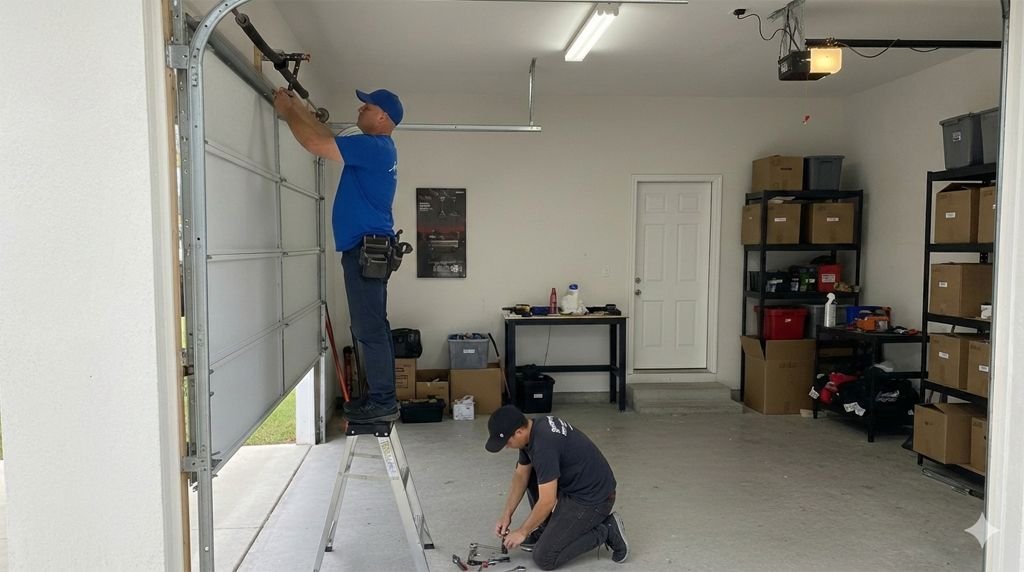
A garage door that won’t close is stressful: your home is open and you can’t leave. The good news is that many causes are simple. Work through these checks in order before calling for service.
1. Look at the safety sensors
Every opener sold in the U.S. since 1993 has two photo-eye sensors near the floor, one on each side of the door. If the invisible beam between them is blocked or misaligned, the door won’t close, or it starts down and goes back up.
- Look for anything in the way: a trash can, a box, a broom, a bike tire, even tall grass.
- Check the lights. Most sensors have a small LED. One is usually steady when everything is fine; a blinking or off light means the sensors don’t see each other.
- Clean the lenses with a soft cloth. Dust, spiderwebs and mud are common culprits.
- Realign them. If one got bumped, gently adjust its bracket until both lights are steady.
- Watch for direct sun. Late-afternoon sun shining straight into a sensor can blind it. If the problem happens only at certain times of day, that’s probably why.
2. Check the wall button and remote
If the door closes from the wall button but not the remote, replace the remote’s battery. If neither works, look for a lock or vacation switch on the wall control; when it’s on, remotes are ignored. Many owners turn it on by accident.
3. Watch for the blinking opener light
Many openers blink their light bulb or an LED a set number of times to report a problem, often a sensor issue. Look up your opener model’s manual for what the blink pattern means.
4. Look at the tracks and rollers
Close the door partway with the opener and watch. If the door shudders, binds or a roller pops out, there may be a bent track or broken roller. Stop operating it if the door looks crooked or stuck. Forcing it can pull it off the track.
5. Check the close-limit setting
If the door touches the floor and immediately reverses, the opener may think it hit an obstruction. That can happen when the close-limit or force settings drift, or when a new floor mat or threshold changed the closing point. Adjustments are in the opener manual, but if you aren’t comfortable, we can set them correctly in a few minutes.
6. Look for a broken spring or cable
If the opener runs but the door barely moves, or it’s very heavy, a spring or cable may be broken. Don’t keep pressing the button and don’t try to repair springs yourself. Here’s how to recognize a broken spring.
7. Close it manually if you must
If you need to secure the house right away, pull the red emergency release cord and lower the door by hand slowly and carefully. Don’t do this if a spring or cable is broken; the door could drop.
When to call us
Call if the sensors are clean and aligned but the door still won’t close, if the door is crooked or off track, if you see a broken spring or frayed cable, or if the opener hums without moving the door. Opener repairs usually cost $200 to $600, and most sensor and limit issues are fixed in one visit.
Call (407) 733-1199, WhatsApp us, or request a free estimate.